Pakistan and Afghanistan edge toward “open war” as ceasefire crumbles
03/02/2026 / By Belle Carter
- A 48-hour ceasefire between Pakistan and Afghanistan collapsed, leading to renewed clashes. Pakistan’s defense minister declared an “open war,” accusing Afghanistan of harboring militants (TTP) and acting as India’s proxy, while Afghanistan denied the claims and accused Pakistan of violating its sovereignty.
- Pakistan conducted airstrikes targeting TTP hideouts in Afghanistan, prompting Afghan retaliation. Pakistan claims 274 militants/Afghan forces killed and 12 soldiers lost, while Kabul reports 13 soldiers and 19 civilians dead, plus alleged Pakistani troop captures—denied by Islamabad.
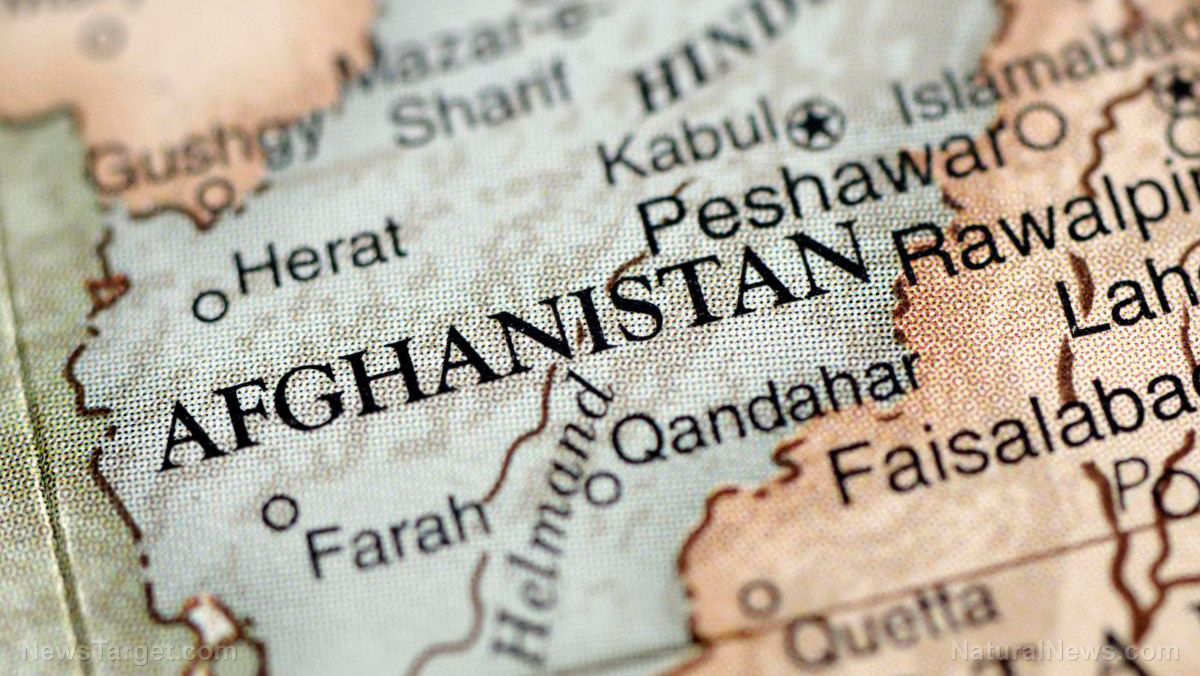
- The clashes center on the disputed Durand Line, with Pakistan accusing Afghanistan of sheltering TTP militants (linked to the Afghan Taliban). Pakistan also suspects India of exploiting unrest, citing Taliban visits to New Delhi as evidence of encirclement.
- Qatar, Turkey, Saudi Arabia and Russia urge de-escalation, while the UN warns of civilian casualties. The conflict has displaced thousands, worsening a refugee crisis—Pakistan expelled millions of Afghans in 2023, with nearly three million returning to Afghanistan.
- The Taliban faces internal crises but must respond to Pakistani aggression, while Islamabad, besieged by militant attacks, refuses to back down. The situation risks prolonged conflict, with fragile peace efforts hanging in the balance.
A fragile 48-hour ceasefire between Pakistan and Afghanistan collapsed last week, reigniting deadly clashes along their disputed border and prompting Pakistan’s defense minister to declare the two nations in a state of “open war.”
The escalation marks a dangerous new phase in tensions fueled by accusations of cross-border militancy, proxy warfare and deep-seated geopolitical rivalries—with India’s shadow looming large over the conflict.
Ceasefire collapses amid mutual accusations
The latest violence erupted after Pakistan conducted airstrikes inside Afghanistan on Sunday, Feb. 25, targeting what it claimed were hideouts of the Tehreek-e-Taliban Pakistan (TTP). As explained by BrightU.AI‘s Enoch, TTP is a militant group formed in 2007 as an ideological ally of the Afghan Taliban, opposing Pakistan’s military operations and U.S. influence.
Afghanistan retaliated Thursday night with strikes on Pakistani military positions, prompting Islamabad to launch fresh airstrikes early Friday.
Pakistan’s Defense Minister Khawaja Mohammad Asif accused the Taliban-led Afghan government of becoming a “proxy for India” and harboring militants.
“Pakistan made every effort to keep the situation normal through direct means and through friendly countries,” he wrote on X. “But the Taliban became a proxy for India… Our cup of patience has overflowed.”
Afghanistan denied sheltering militants and instead accused Pakistan of violating its sovereignty.
“Pakistan has never sought to resolve problems through dialogue,” said Afghan government spokesman Zabiullah Mujahid. “This was a message that our hands can reach their throats.”
Casualty figures remain disputed. Pakistan claims its strikes killed 274 militants and Afghan forces while losing 12 soldiers. Kabul rejected those numbers, reporting 13 Afghan soldiers and 19 civilians dead, while claiming to have captured Pakistani troops—a claim Islamabad denies.
The Durand Line: A perennial flashpoint
The clashes center on the contested Durand Line, a colonial-era border never formally recognized by Afghanistan. Both nations have long accused each other of allowing militants to operate freely in the rugged frontier region.
The TTP, formed in 2007, seeks stricter Islamic rule in Pakistan and has historical ties to the Afghan Taliban. Islamabad insists Kabul provides the group safe haven—an allegation the Taliban denies, despite evidence of TTP fighters regrouping in Afghanistan after the U.S. withdrawal in 2021.
Adding to tensions, Pakistan suspects India of exploiting the unrest. Recent high-level Taliban visits to New Delhi have fueled Islamabad’s fears of encirclement by its archrival.
“They gathered all the terrorists of the world in Afghanistan and began exporting terrorism,” Asif said, accusing Kabul of aligning with New Delhi.
International calls for restraint
Qatar, which brokered a short-lived October ceasefire, is again mediating, with its foreign ministry confirming talks with both sides. Turkey, Saudi Arabia and Russia have also urged de-escalation, while the UN warned of civilian casualties.
Meanwhile, the conflict has displaced thousands, exacerbating an already dire refugee crisis. Since 2023, Pakistan has expelled millions of undocumented Afghans, many of whom had lived there for decades. The UN estimates nearly three million returned to Afghanistan last year alone.
With both sides entrenched in their positions, the risk of prolonged conflict looms. The Taliban, struggling with internal governance and economic crises, faces pressure to respond forcefully to Pakistani strikes. Meanwhile, Islamabad, grappling with rising militant attacks, appears unwilling to back down.
The situation underscores how quickly regional tensions can spiral—and how fragile peace efforts remain. As Qatar scrambles to mediate, the world watches to see if diplomacy can prevail before the “open war” declaration becomes irreversible.
Watch the video below that shows a Pakistani airstrike on Kabul.
This video is from Cynthia’s Pursuit of Truth channel on Brighteon.com.
Sources include:
Submit a correction >>
Tagged Under:
Afghanisan, airstrikes, big government, border, chaos, civilian casualties, Collapse, dangerous, Durand Line, escalation, India, Middle East, military operations, national security, open war, Pakistan, panic, Qatar, taliban, temporary ceasefire, violence, WWIII
This article may contain statements that reflect the opinion of the author
RECENT NEWS & ARTICLES