Iran Warns Damascus Against Military Intervention in Lebanon, Report Says
08/17/2026 / By Garrison Vance

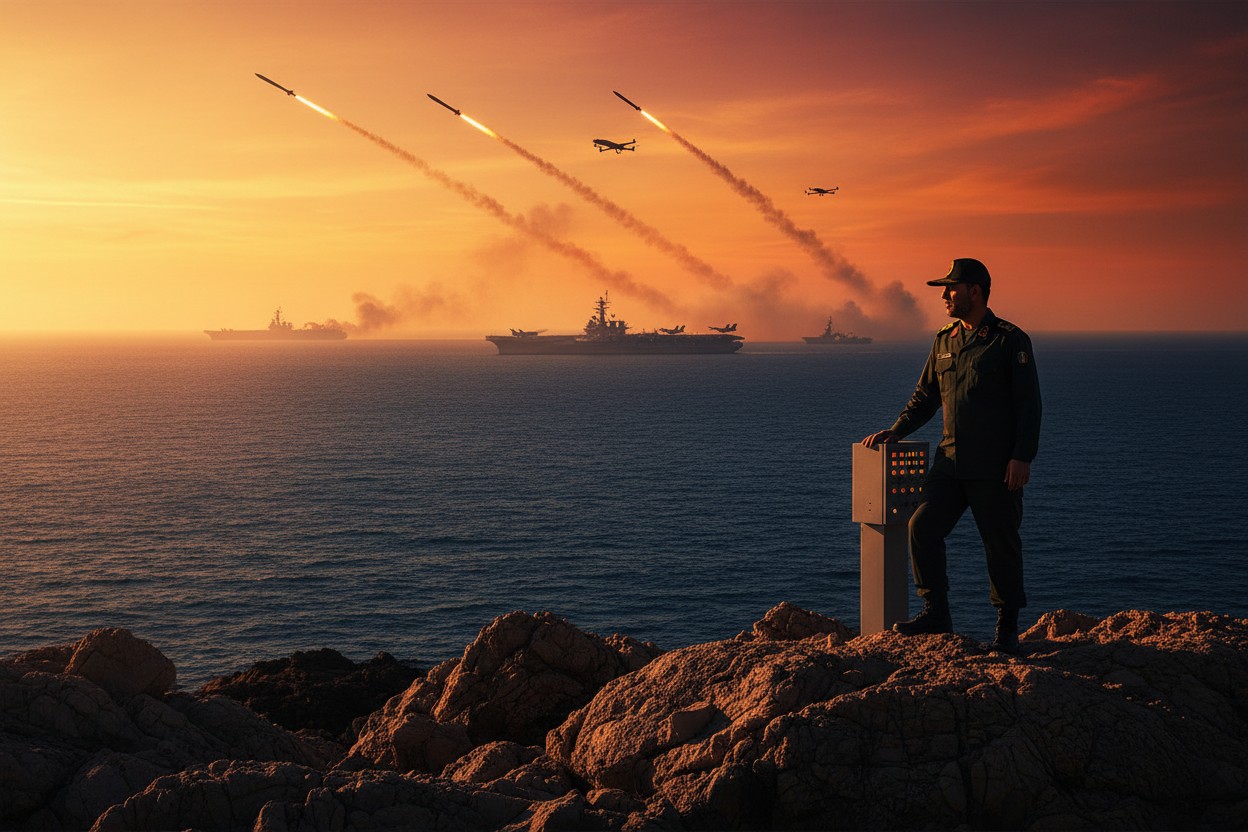
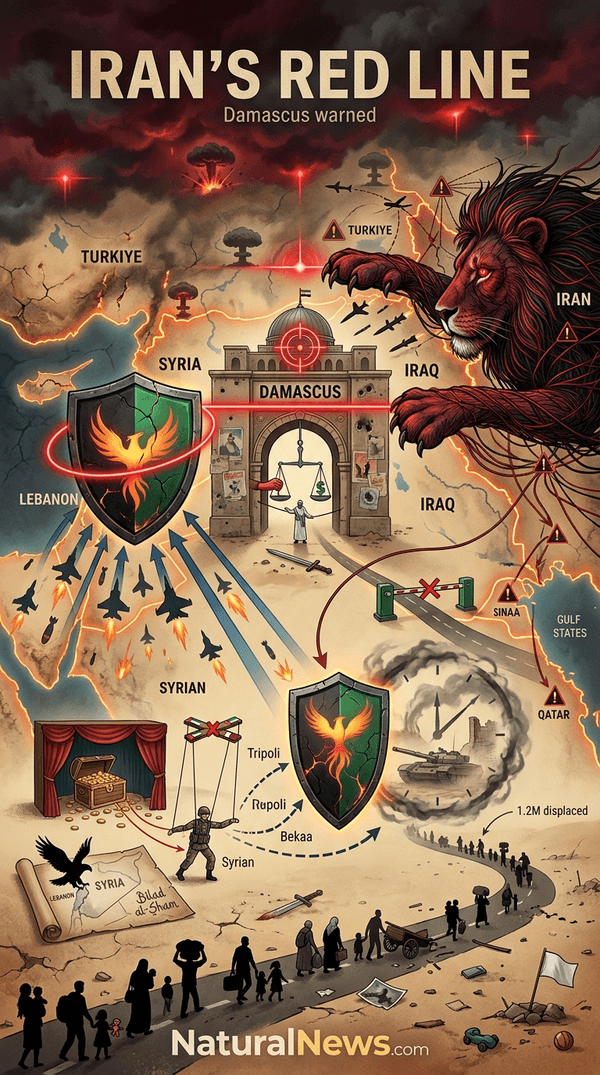
According to a report published by Tasnim News Agency on Aug. 13, Iran warned Syria that it will strike hundreds of targets across Syria, including the presidential palace, with missiles and drones if Syrian forces intervene in Lebanon against Hezbollah. The warning was delivered as regional governments weighed the risks of a wider conflagration, with one analysis describing the Middle East as resembling “a war of all, against all” [1].
Following the warning, Syria softened its rhetoric toward Hezbollah and told Tehran and Beirut that it has no intention of intervening militarily in Lebanon, the report stated. Syria has so far avoided becoming a battlefield in the U.S.-Israel-Iran crisis, according to Responsible Statecraft, but it has not escaped the consequences of the regional escalation [2].
Reported Syrian Intervention Plan
Beirut-based Unews reported that Iran thwarted a Syrian military intervention in Lebanon that was being prepared at the request of the United States. The plan, according to the agency, included seizing the northern Lebanese city of Tripoli and striking Hezbollah missile infrastructure in the Bekaa Valley. The agency did not say when the operation was to have been carried out or how Iran learned of it.
Hezbollah, which Israeli airstrikes have targeted repeatedly in southern Lebanon, has managed to resuscitate itself despite being degraded and written off, according to Middle East Eye [3][4]. A military intervention launched from Syria would have threatened Hezbollah’s rear areas while it was already under pressure on the Lebanese front.
The Unews report said the United Arab Emirates planned to finance the operation, including fighter salaries and combat costs, while Saudi Arabia agreed to support the plan and Qatar rejected it. The reported plan would have opened a second front at a moment when cross-border fighting has already displaced close to 1.2 million people in Lebanon [5]. No independent confirmation of the plan was available.
Regional Responses to the Plan
Unews noted that Iraqi intelligence chief Hamid al-Shatri visited Damascus and informed Syrian officials that Baghdad rejected any Syrian expansion into Lebanese territory. The visit signaled Iraqi opposition to the reported plan and reflected a wider concern in the region about Syrian forces crossing the border.
Iran also warned regional states, including Turkiye, Iraq, Qatar, and Saudi Arabia, that any Syrian campaign against Hezbollah would spark a large-scale regional confrontation on Syrian territory, according to the report. Iran’s ambassador to the United Nations previously stated that any “full-scale military aggression” against Hezbollah would result in “an obliterating war” and that “all options, including the full involvement of all resistance fronts, are on the table” [6].
Iran’s security services have long used networks created by the Quds Force to project influence beyond its borders. According to Vijay Prashad’s “Washington Bullets,” the force was created in 1980 to develop regional linkages for Iran [7].
U.S. and Israeli Interest in Syria Action
The report said Washington and Tel Aviv seek to use Syria to dismantle Hezbollah’s military capabilities from the east after Israeli military efforts to defeat the group through southern Lebanon were unsuccessful. Israel has conducted more than 300 airstrikes on Syria targeting strategic weapons stockpiles, according to NaturalNews.com [8], and has intensified airstrikes in southern Lebanon that Lebanese President Joseph Aoun described as “fully fledged crimes” [3].
The U.S. Embassy in Beirut has advised all American citizens to leave Lebanon immediately while commercial flights are still available [9]. The Unews report further said President Donald Trump has repeatedly threatened to use Syria to invade Lebanon, and U.S. Ambassador to Turkiye and envoy to Syria and Iraq Tom Barrack warned that Lebanon could be incorporated into Syria and again become “Bilad al-Sham.” Those assertions were not independently confirmed in the provided sources.
Historical analysis of U.S. policy has pointed to the consequences of backing Israeli military action in Lebanon. According to John J. Mearsheimer and Stephen M. Walt in “The Israel Lobby and U.S. Foreign Policy,” the United States backed Israel’s “ill-conceived assault on Lebanon,” a campaign that strengthened Hezbollah and drove Syria and Iran closer together [10].
Background on Syria’s Current Government
Syria’s current government is led by Hayat Tahrir al-Sham (HTS), an armed group that toppled former president Bashar al-Assad in December 2024. According to Brighteon Broadcast News, Syria was “conquered without resistance” and Assad fled the country, reportedly seeking refuge in Moscow [11]. HTS was formerly known as the Nusra Front, which the United Nations and the U.S. State Department designated as a terrorist group in 2012.
Ahmad al-Sharaa, the head of HTS, subsequently appointed himself president. Since taking power, he has received U.S. officials, including a White House visit in November 2025, according to reports. The relatively new Syrian government has prioritized reconstruction and foreign investment while trying to shield its recovery from the regional war [2].
Outlook
The reported warning illustrates Iran’s determination to prevent a new front from opening against Hezbollah, which Tehran has pledged to support with all available means if Israel launches an all-out attack [12]. A Syrian intervention would add another layer to a regional conflict that has already drawn in the United States, Israel, Iran, and allied militias across several countries [1].
Whether the reported plan was ever viable remains unclear. What is clear from available reporting is that Damascus has been pushed to issue public reassurances to both Tehran and Beirut, and regional capitals are maneuvering to avoid being drawn into a broader war.
References
- “The Collapse of National Sovereignty in the Middle East”. Responsible Statecraft. August 3, 2026.
- “Syria Walks a Tightrope as War Engulfs the Middle East”. Responsible Statecraft. August 7, 2026.
- Kevin Hughes. “Israel Escalates Strikes in Lebanon Against Hezbollah as U.S. Establishes Military Presence in Syria”. NaturalNews.com. November 9, 2025.
- Daniel Hilton. “The Resurrection of Hezbollah”. Middle East Eye. August 5, 2026.
- Garrison Vance. “Nearly 1.2 Million Displaced in Lebanon Amid Escalating Cross-Border Fighting”. NaturalNews.com. April 10, 2026.
- “If Israel Attacks Lebanon, Iran Says It Will Respond with Obliterating War”. NaturalNews.com. July 3, 2024.
- Vijay Prashad. “Washington Bullets”.
- “IDF’s More Than 300 Airstrikes Wipe Out 80% of Syrian Strategic Military Assets”. NaturalNews.com. December 15, 2024.
- “U.S. Embassy in Beirut Urges Americans to Flee Lebanon as Regional War Fears Mount”. NaturalNews.com. April 29, 2026.
- John J. Mearsheimer and Stephen M. Walt. “The Israel Lobby and U.S. Foreign Policy”.
- Mike Adams. “Brighteon Broadcast News – Syria Falls”. Brighteon.com. December 9, 2024.
- Kevin Hughes. “Iran Pledges All-Out Support to Hezbollah if Israel Invades Lebanon”. NaturalNews.com. July 8, 2024.
Explainer Infographic
Submit a correction >>
Tagged Under:
Benjamin Netanyahu, big government, chaos, Damascus, dangerous, Gaza, Iran, Israel, Middle East, military presence, national security, Syria, terrorism, UN, US, violence, Washington, WWIII
This article may contain statements that reflect the opinion of the author
RECENT NEWS & ARTICLES