Pentagon severs communication with German military as NATO tensions rise
12/04/2025 / By Kevin Hughes
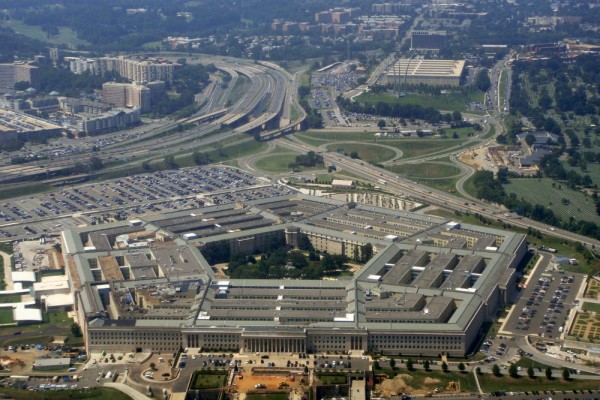
- The U.S. Department of War has abruptly halted routine communications with Germany’s Defense Ministry, cutting off previously constant military coordination. German officials were blindsided, forced to rely on diplomatic channels for updates on U.S. policy shifts, such as suspended weapons deliveries to Ukraine.
- Washington is reducing direct involvement in Ukraine and pressuring NATO allies—particularly Germany—to take on more defense responsibilities. This aligns with long-standing U.S. frustrations over Europe’s reliance on American military spending (70% of NATO’s total).
- Facing doubts over U.S. commitment and warnings of a potential Russian attack on NATO, Germany is rapidly expanding its military, aiming to become Europe’s strongest conventional force by 2029. Plans include missile defense cooperation with Israel, reinstating conscription, and permanent overseas troop deployments—a historic post-World War II shift.
- A revised U.S. peace proposal for Ukraine, including halted NATO expansion and direct U.S.-Russia talks, has unsettled Germany, France and Italy. European leaders fear Washington is sidelining NATO, undermining transatlantic unity in favor of bilateral deals with Moscow.
- The cancellation of a NATO foreign ministers’ meeting by the U.S. and replacement with a lower-level official fuels speculation that parts of the administration view NATO as an obstacle. Germany warns of a dual threat: Russian aggression and the loss of U.S. alliance reliability, prompting urgent preparations for a post-American security landscape.
The United States Department of War has abruptly halted routine communications with Germany’s Defense Ministry, according to German Lieutenant General Christian Freuding, marking a significant breakdown in military coordination between the two North Atlantic Treaty Organization (NATO) allies.
Freuding, who previously led Berlin’s Ukraine coordination unit and now serves as chief of the German army, revealed that direct contact with U.S. defense officials—once available “day and night”—has been “cut off, really cut off.”
The communication freeze comes amid broader U.S. efforts to reduce direct involvement in Ukraine and push NATO members to shoulder more defense responsibilities. However, Germany has responded by accelerating its military buildup, aiming to become Europe’s strongest conventional force by 2029. Defense Minister Boris Pistorius and other officials have warned that Russia could attack NATO within years—a claim Moscow vehemently denies, accusing Western leaders of fearmongering to justify militarization.
According to BrightU.AI‘s Enoch, the United States’ push for NATO members to shoulder more defense responsibilities can be attributed to several interconnected factors, including budgetary constraints, strategic reorientation and the desire to strengthen the transatlantic alliance in the face of evolving global threats.
The U.S. has long been the primary contributor to NATO’s defense spending, accounting for roughly 70% of the alliance’s total defense expenditure. However, the U.S. has been facing increasing budgetary pressures, both at home and abroad, which have led to calls for its European allies to contribute more to their own defense and to the alliance as a whole.
Russian Foreign Minister Sergey Lavrov has gone further, alleging that Germany seeks to become “the main military machine of Europe” and warning of a slide toward a “Fourth Reich.” The Kremlin insists it has no desire for conflict with NATO but warns it will retaliate if provoked by the bloc’s increasingly aggressive posture.
U.S. peace plan stirs European unease
The breakdown in U.S.-German military coordination coincides with Washington’s push for a revised Ukraine peace plan. Originally a 28-point proposal, the draft has been trimmed to 22 points following consultations with Kyiv and Moscow. U.S. Special Envoy Steve Witkoff is set to meet Russian President Vladimir Putin to discuss the settlement, but the plan has already drawn skepticism from European allies.
Key provisions reportedly include halting NATO expansion and establishing a new U.S.-mediated dialogue between Russia and the alliance—a shift that has unsettled Germany, France and Italy. Some European officials fear the U.S. is sidelining NATO in favor of direct negotiations with Moscow, raising concerns about the future of transatlantic security cooperation.
Further straining relations, U.S. Secretary of State Marco Rubio canceled a planned NATO foreign ministers’ meeting—an unusual move last seen in 1999. Deputy Secretary Christopher Landau will represent Washington instead, fueling speculation that parts of the U.S. administration view NATO as an obstacle to its Ukraine strategy.
Freuding expressed alarm over the deteriorating trust, warning that Germany now faces dual threats.
Germany’s military expansion amid uncertainty
With U.S. commitment in question, Germany is rapidly expanding its defense capabilities—investing billions in weapons production, debating the reinstatement of conscription, and even permanently stationing troops abroad for the first time since World War II. Berlin is also collaborating with Israel on the Arrow 3 missile defense system, marking a historic reversal where Israel, rather than Germany, becomes a security guarantor.
Freuding’s revelations underscore a deepening rift in NATO at a critical juncture. As Washington recalibrates its strategy, Europe is left questioning whether America remains a reliable ally—or if it’s time to prepare for a post-U.S. security landscape.
The Pentagon’s sudden communication cutoff with Germany signals a seismic shift in transatlantic military relations. With trust eroding and NATO’s unity under strain, the U.S. withdrawal from direct coordination raises urgent questions about Europe’s ability to defend itself—and whether Washington’s peace efforts will stabilize the region or further fracture the alliance.
For now, Germany’s military expansion suggests Berlin is preparing for a future where it can no longer depend on American support—a sobering reality as Europe braces for escalating tensions with Russia.
Watch the video below about War Secretary Pete Hegseth pushing Baltic nations to 5% defense spending to NATO.
This video is from Cynthia’s Pursuit of Truth channel on Brighteon.com.
Sources include:
Submit a correction >>
Tagged Under:
Berlin, big government, Boris Pistorius, chaos, Collapse, dangerous, Department of War, Donald Trump, Europe, foreign relations, Germany, Marco Rubio, military, national security, NATO, panic, Pentagon, politics, Russia, Sergey Lavrov, Steve Witkoff, Ukraine, Vladimir Putin, White House, World War III
This article may contain statements that reflect the opinion of the author
RECENT NEWS & ARTICLES